

Quick answer: Uganda’s Ministry of Health says there is currently no confirmed active Ebola case in Uganda. Gorilla trekking and safari operations remain open. However, Uganda has strengthened health screening at airports and land borders because Ebola transmission continues in the Democratic Republic of the Congo, with imported cases also reported in Kenya and Nigeria.
Travellers should continue monitoring official information, allow additional time for arrival screening, and disclose any recent travel to the Democratic Republic of the Congo.
News about Ebola in East Africa can understandably cause concern, especially when Uganda appears in a traveller’s recent journey. However, travelling through a country is not proof that someone contracted an infection there. A regional outbreak also does not automatically mean that Uganda’s gorilla parks or safari destinations have closed.
This guide explains Uganda’s current Ebola status, what has changed at the borders, and what you should check before travelling for gorilla trekking.
Does Uganda currently have Ebola?
As of 26 October 2026, Uganda’s Ministry of Health says the country has no confirmed active Ebola case.
The Ministry published an official statement titled No Ebola in Uganda on 20 October 2026. It subsequently issued additional investigation and preparedness statements on 23 and 25 October.
Uganda had previously declared its domestic outbreak over. The country’s official Ebola information dashboard reports zero current admissions and zero active contacts under follow-up for that concluded outbreak.
However, Uganda shares a long border with the Democratic Republic of the Congo, where transmission continues. Uganda has therefore strengthened surveillance and entry screening to reduce the possibility of another imported case.
Why is Uganda appearing in recent Ebola reports?
Uganda has appeared in recent international reports because travellers who were later diagnosed in Kenya and Nigeria had travelled through Uganda.
The World Health Organization’s update of 23 October 2026 reported that:
- Kenya’s first confirmed case involved a person who travelled from the DRC to Kenya through Uganda.
- Kenya’s eight additional cases known by 20 October were linked to that imported case.
- WHO reported no evidence of transmission outside the identified Kenyan cluster at that time.
- Nigeria confirmed an imported case in a patient who had travelled from Uganda.
- Investigations were continuing to establish the Nigerian patient’s complete travel history and possible source of exposure.
A recent travel history involving Uganda does not automatically prove that an infection occurred in Uganda.
Uganda’s Ministry of Health continues to state that there is no confirmed active domestic case, while investigations and regional public-health coordination continue.
What is happening in the Democratic Republic of the Congo?
The Democratic Republic of the Congo remains the centre of the current Bundibugyo virus disease outbreak.
According to WHO, the DRC had recorded 9,704 confirmed cases and 4,687 deaths as of 20 October 2026. Cases had been reported across 66 health zones in eight provinces.
WHO assessed the risk inside the DRC as very high and the risk for countries sharing land borders with the DRC as high.
Because the situation remains serious and can change quickly, GorillaTrekking.co is not recommending routine gorilla-trekking extensions into the DRC at this time.
Travellers interested in regional gorilla experiences can ask us about suitable alternatives in Uganda and Rwanda.
Is gorilla trekking in Uganda still open?
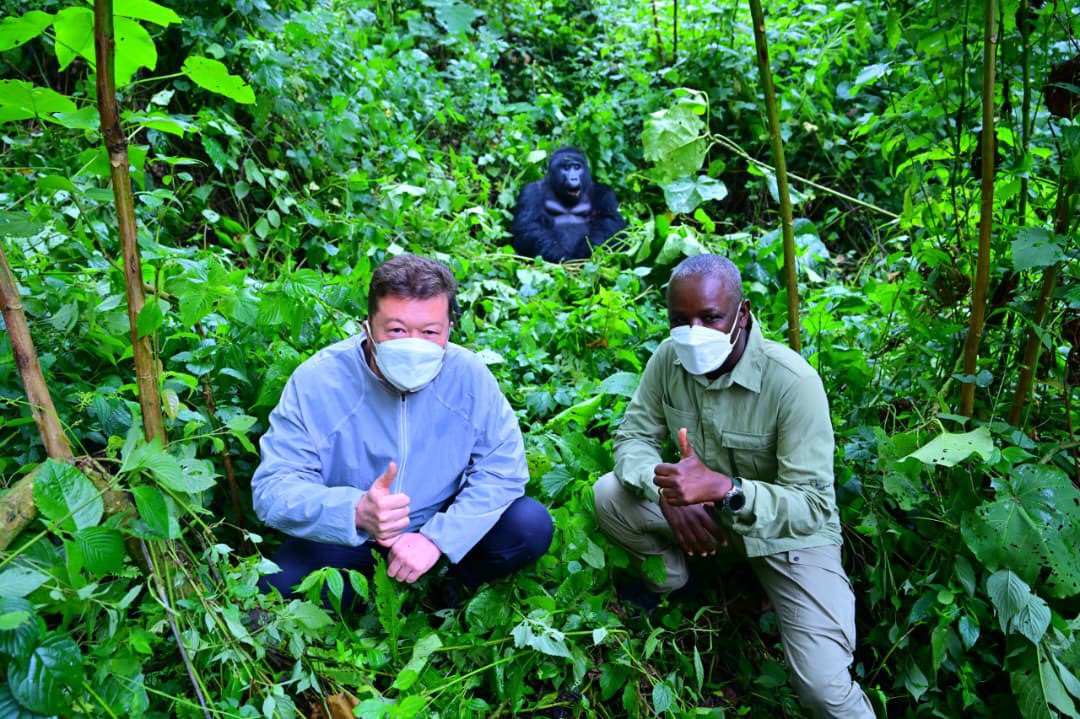
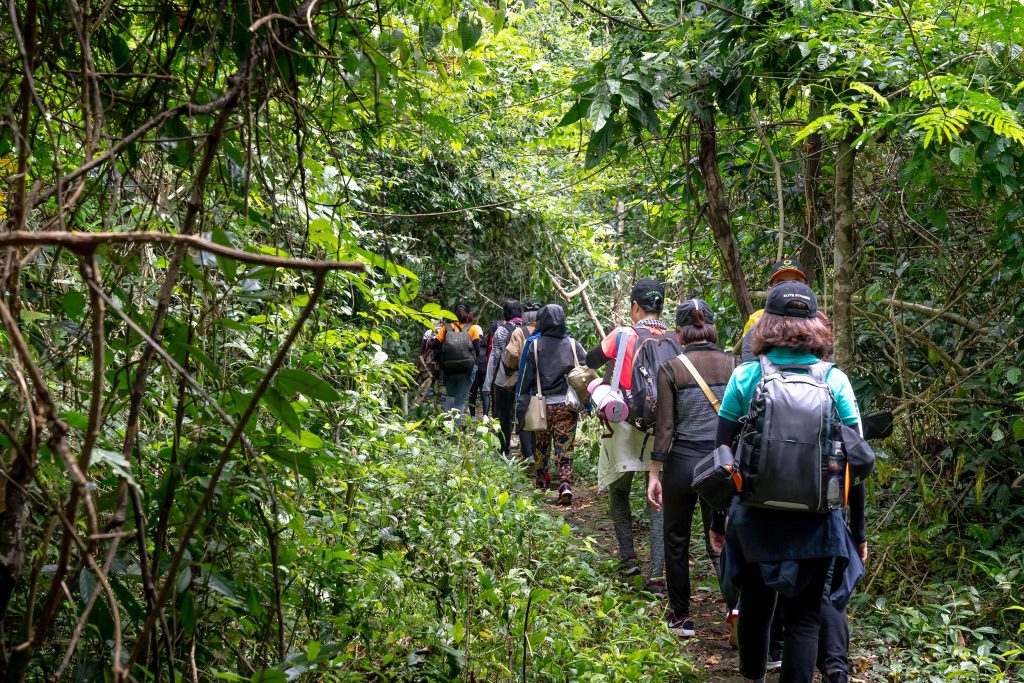
Yes. Gorilla trekking remains open in Uganda.
There has been no national announcement closing Bwindi Impenetrable National Park or Mgahinga Gorilla National Park because of the regional outbreak.
Visitors can continue booking gorilla permits and planning their journeys, subject to normal permit availability, road conditions, and Uganda Wildlife Authority regulations.
You can explore our current gorilla trekking trips in Uganda and Rwanda or read our detailed guide on how to plan your gorilla trek.
Uganda Wildlife Authority’s normal health rules still apply. Travellers who are ill may not be allowed to visit the gorillas because human illnesses can also affect habituated gorilla families.
Read our gorilla-trekking etiquette and health rules before your journey.
Are Uganda’s national parks still open?
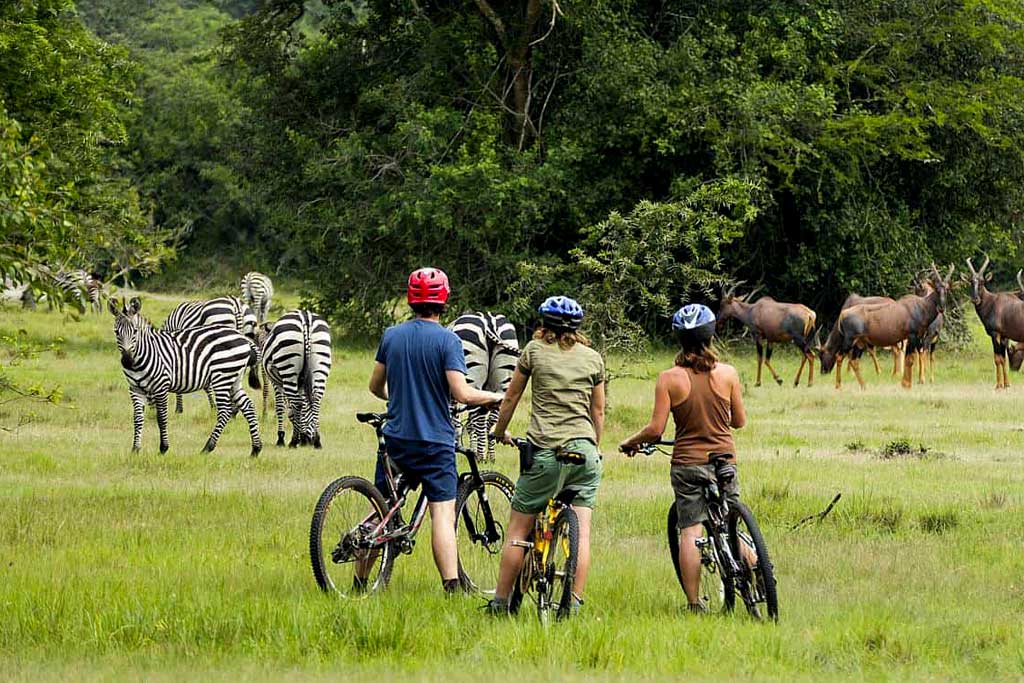
Yes. Uganda’s principal national parks and safari destinations remain operational.
These include:
- Bwindi Impenetrable National Park
- Mgahinga Gorilla National Park
- Queen Elizabeth National Park
- Kibale National Park
- Murchison Falls National Park
- Lake Mburo National Park
- Kidepo Valley National Park
The strengthened measures currently concern public-health surveillance, border screening and travellers with recent DRC travel. They do not amount to a general closure of Uganda’s safari industry.
Travellers should still confirm individual permits, lodge availability, routes and activities before making non-refundable payments.
What health screening should travellers expect when entering Uganda?
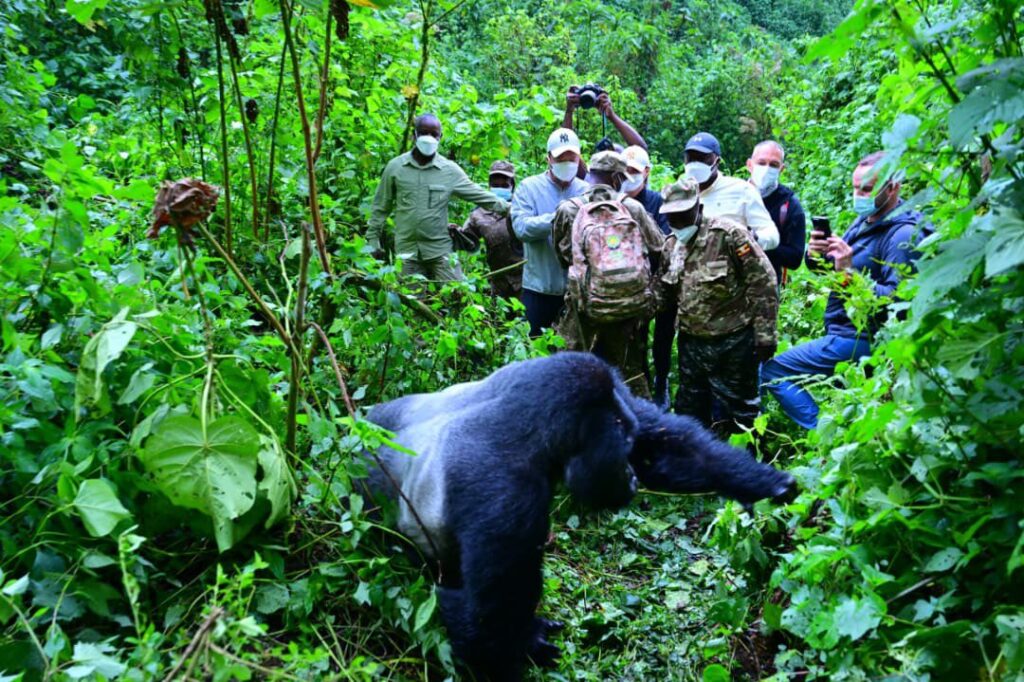
Uganda has strengthened screening at Entebbe International Airport and its land-border entry points.
International travellers should be prepared to:
- Provide passenger-locator information.
- Undergo a health check at the point of entry.
- Answer questions concerning their recent travel history.
- Disclose recent travel involving the Democratic Republic of the Congo.
- Follow additional instructions from immigration or public-health officials.
- Allow additional time for arrival procedures.
Ugandan citizens returning from the DRC are subject to additional quarantine requirements announced by the government. Travellers of other nationalities who have recently visited the DRC may also face additional questions or procedures.
Border requirements can change quickly. Check the Uganda Ministry of Health press-statement page shortly before departure.
You should also give your tour operator accurate information about the countries you visited before travelling to Uganda.
Is Uganda safe to visit for gorilla trekking?
No country can be described as completely risk-free.
The most accurate answer is that Uganda currently reports no confirmed active domestic Ebola case, its gorilla-trekking destinations remain open, and heightened surveillance is in place because regional transmission continues.
WHO currently advises against general restrictions on travel or trade involving affected countries. However, this advice does not replace the guidance issued by your government, airline, insurer or doctor.
Before travelling, consider the following:
Your exact itinerary
A Uganda-only gorilla safari is different from an itinerary entering areas of the DRC where active transmission has been reported.
Your nationality and return route
Entry, transit and return-screening requirements may differ depending on whether you are travelling to the United Kingdom, United States, European Union, Australia or another destination.
Your travel insurance
Ask your insurer to confirm that your policy remains valid. Check its provisions concerning epidemics, official travel advisories, cancellation, postponement and medical evacuation.
Your personal health
Obtain personalised medical advice from a qualified travel-health professional.
Your booking conditions
Understand the cancellation and postponement conditions attached to your gorilla permits, accommodation and flights before paying.
Can Ebola spread during an ordinary gorilla trek?
WHO says Bundibugyo virus disease spreads between people through direct contact with the blood or bodily fluids of an infected person or through contaminated materials.
WHO also says infected individuals are not infectious until symptoms begin.
An ordinary game drive, lodge stay, or distant wildlife sighting is not described as a typical transmission route.
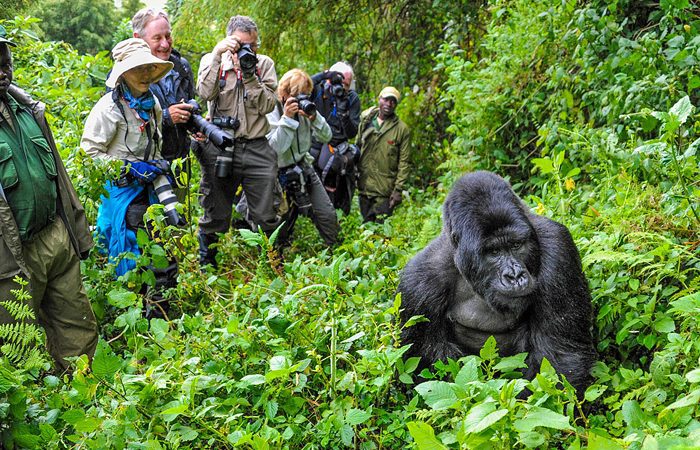
However, travellers should never touch wild animals. Every visitor must follow ranger instructions and maintain the required distance during a gorilla encounter.
If you feel unwell before your gorilla trek, tell your guide. Do not attempt to conceal an illness so that you can enter the forest.
This requirement protects:
- The traveller
- Other visitors
- Rangers and guides
- Lodge and park employees
- The habituated gorilla families
This article provides general travel-planning information and not individual medical advice. Contact a qualified medical professional if you have symptoms, possible exposure, or questions about vaccination.
Should you cancel your Uganda gorilla safari?
There is no general reason to cancel every Uganda gorilla safari solely because of the current regional headlines.
The right decision depends on:
- Your exact itinerary
- Your personal risk tolerance
- The official advisory applicable to your nationality
- Your travel-insurance conditions
- Your recent travel history
- Whether your journey includes the DRC
Before cancelling, ask your tour operator to confirm:
- Whether your planned destinations remain open.
- Whether your route approaches or enters the DRC.
- Whether a different route is available.
- Which payments are already non-refundable.
- Whether you can postpone your permits or accommodation.
- Whether an alternative Uganda or Rwanda itinerary is available.
GorillaTrekking.co monitors major developments affecting entry procedures, routes, gorilla permits and cross-border travel.
When a cross-border component becomes unsuitable, we discuss practical alternatives instead of asking the traveller to rebuild the entire journey alone.
What should you do before travelling to Uganda?
Use this checklist seven days before departure and repeat it approximately 72 hours before your flight:
- Read the latest Uganda Ministry of Health statements.
- Check the latest WHO Ebola outbreak update.
- Review the official travel advisory issued by your country.
- Confirm your airline and transit-country requirements.
- Inform your operator about any recent DRC travel.
- Reconfirm your travel-insurance coverage in writing.
- Save your operator’s airport and emergency contacts.
- Allow additional time for arrival health procedures.
- Avoid relying on undated social-media posts or old travel blogs.
How GorillaTrekking.co supports travellers
GorillaTrekking.co specialises in private and customised gorilla journeys in Uganda and Rwanda.
We are a Raja Safari Holidays brand, supported by a Uganda-based safari team that monitors official developments affecting gorilla permits, entry procedures, routes and cross-border travel.
We can help you:
- Plan a Uganda-only or Uganda–Rwanda gorilla journey.
- Select an itinerary appropriate for your dates and travel style.
- Understand gorilla-permit payment and cancellation conditions.
- Receive relevant pre-departure information.
- Adjust arrival-day arrangements when border processing takes longer.
- Consider alternative routing when a border or destination becomes unsuitable.
- Combine gorilla trekking with chimpanzees, wildlife and cultural experiences.
To begin planning, request a personalised gorilla-trekking quote.
Tell us your nationality, travel dates, countries you intend to visit and international flight route. This allows us to provide planning information that is more relevant to your journey.
Frequently Asked Questions
Does Uganda have Ebola right now?
As of 26 October 2026, Uganda’s Ministry of Health reports no confirmed active domestic Ebola case. Enhanced border surveillance remains in place because of continuing regional transmission.
Is gorilla trekking in Uganda still open?
Yes. Gorilla trekking in Bwindi and Mgahinga remains operational, subject to permit availability and normal local operating conditions.
Is Entebbe International Airport open?
Yes. Entebbe International Airport remains open. Travellers should allow additional time for health screening and arrival procedures.
Do tourists have to quarantine when entering Uganda?
Ordinary international safari arrivals are subject to health screening and passenger-locator requirements. Additional restrictions apply to certain people arriving from or returning from the DRC.
Requirements can change, so check the official rules for your nationality and recent travel history before departure.
Has WHO recommended stopping travel to Uganda?
No. In its 23 October update, WHO advised against general restrictions on travel or trade involving affected countries.
Travellers should still review their national travel advisory, airline rules and insurance conditions.
Can I combine Uganda and the DRC on one gorilla safari?
GorillaTrekking.co is not currently recommending routine DRC gorilla extensions while transmission and border measures remain severe and changeable.
Ask our team about Uganda or Rwanda alternatives.
Can I combine Uganda and Rwanda?
Uganda and Rwanda combinations may remain possible, subject to current entry requirements, border operations, permit availability and the traveller’s insurance conditions.
Where can I find the latest official information?
Use these official sources:
- Uganda Ministry of Health
- Uganda Ebola information dashboard
- World Health Organization
- Your government’s official travel-advice service
- Your airline
- Your travel-insurance company
Always check the date when reading a travel or health update.

Plan Your Gorilla Trek With Reliable Local Support
Gorilla trekking remains one of Africa’s most powerful wildlife experiences. Current regional health developments make accurate information and careful planning more important, but they do not mean that every Uganda gorilla journey has stopped.
Our team will help you understand the route, permits, accommodation, entry procedures and current operating conditions before you travel.
Request your personalised gorilla-trekking itinerary and let us help you plan your journey responsibly.
GorillaTrekking.co — A Raja Safari Holidays Brand
